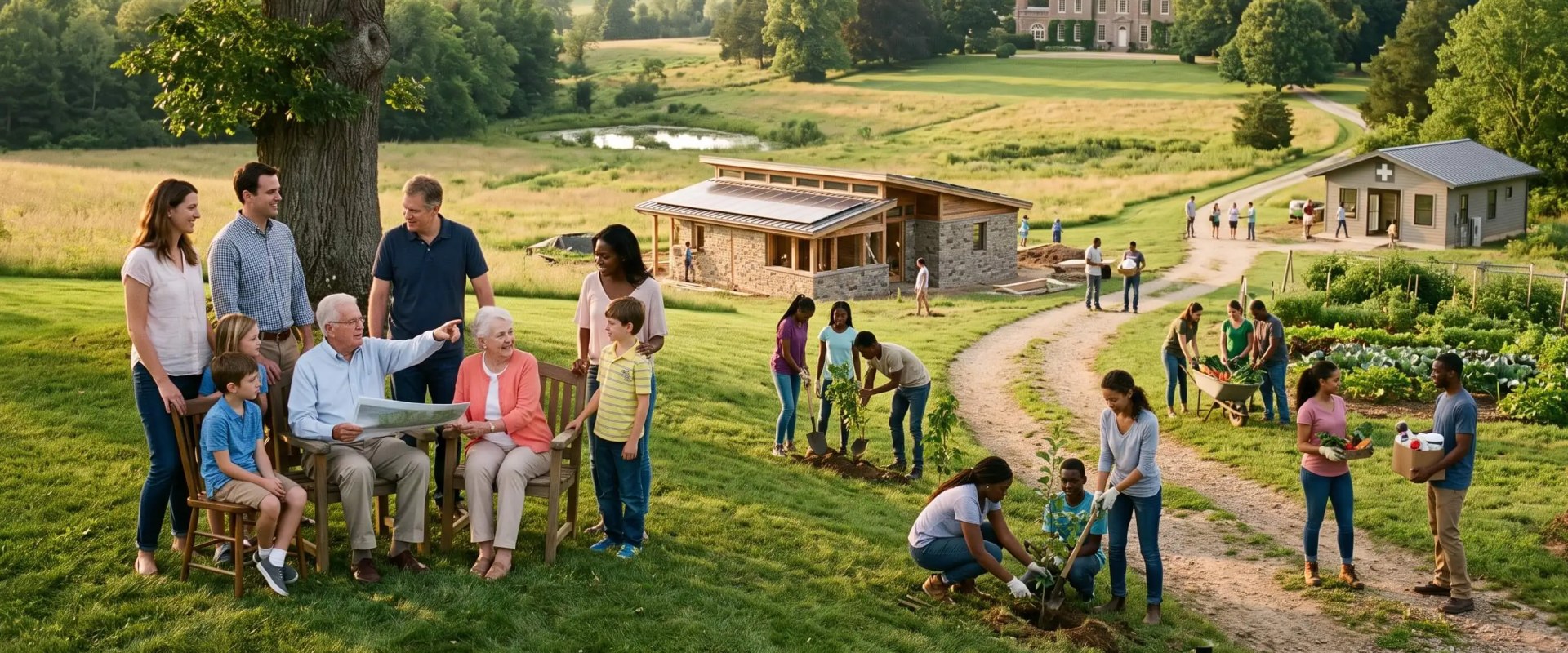
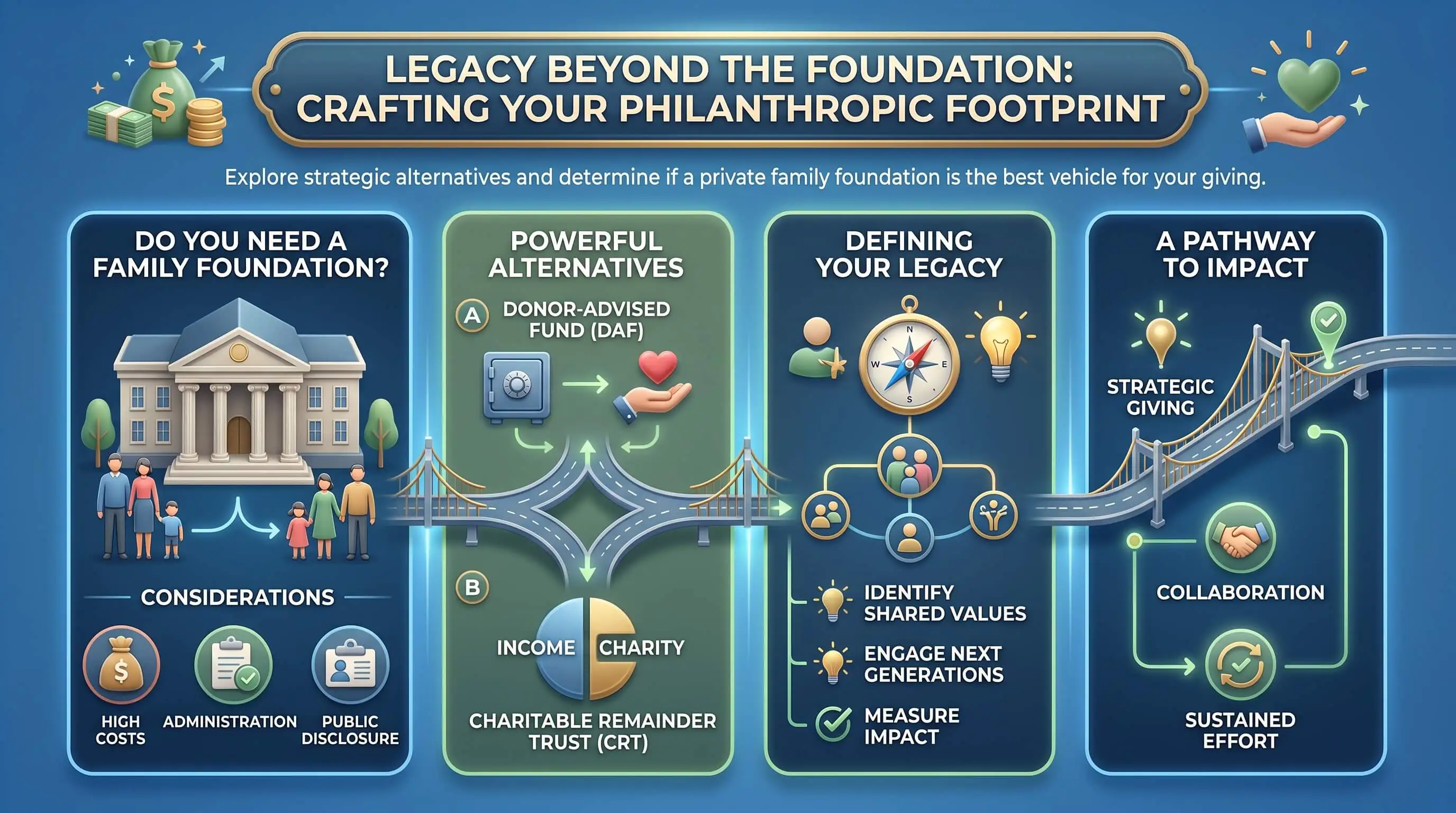
You can build a philanthropic legacy without ever filing foundation paperwork. A family foundation is one option, and for many families it isn't the strongest one. Donor-advised funds, charitable trusts, direct gifts, and bequests can all carry your values forward with less cost and less administration. Family foundation management and philanthropic planning services can help families decide how a foundation fits alongside other giving structures. The right choice depends on what you want your giving to accomplish and how much of your family's time you're prepared to give it.
At Legacy Bridge Private Family Offices, we often hear a version of the same sentence in a first meeting after a business sale: "We want to leave a legacy, so we should probably start a foundation." Sometimes that instinct is right. Just as often, a family commits to board meetings and annual IRS filings before anyone has agreed on what the money should do. That's family foundation management without a mission, and it wears families down.
If you're reading this on a school consulting site, your family probably gives already. The annual fund letter shows up every fall, and sooner or later someone from the development office asks whether you'd consider a named scholarship. Those gifts deserve the same care you put into choosing the school.
TL;DR Quick Answers
Family foundation management and philanthropic planning services
Family foundation management and philanthropic planning services help families give with purpose, whether or not they ever run a foundation. At Legacy Bridge, we treat them as one coordinated plan. First decide what the giving is for, then choose and manage the structures that fit.
Family foundation management: Grantmaking, board coordination, recordkeeping, the annual Form 990-PF filing, and meeting the IRS minimum distribution of roughly 5% of assets.
Philanthropic planning services: Clarifying family values, selecting vehicles such as donor-advised funds, charitable trusts, or a foundation, and documenting every gift.
Who does what: Your CPA and attorney provide tax and legal advice. A family office coordinates the strategy and keeps records clean year-round.
Best fit: Families with significant annual giving, a recent liquidity event, giving that lacks structure, or a goal of involving the next generation.
Top Takeaways
You don't need a family foundation to build a philanthropic legacy.
Decide what your giving is for, then choose the structure.
Donor-advised funds, charitable trusts, and planned gifts can all carry a family's values forward.
Family foundation management gives you control and visibility, and it requires time and compliance work every year.
Coordinated planning is what keeps consistent once the first generation steps back.
Why a Family Foundation Isn't the Only Path to a Lasting Legacy
A legacy lives in what your family chooses to support year after year, and in whether your children understand why, far more than in any legal entity. A foundation can hold that. So can a well-run donor-advised fund or a trust written into your estate plan.
Families with significant wealth have long coordinated this through a family office, one team that oversees investments, taxes, estate planning, and giving. The lesson from that model is practical. The vehicle matters less than the plan above it.
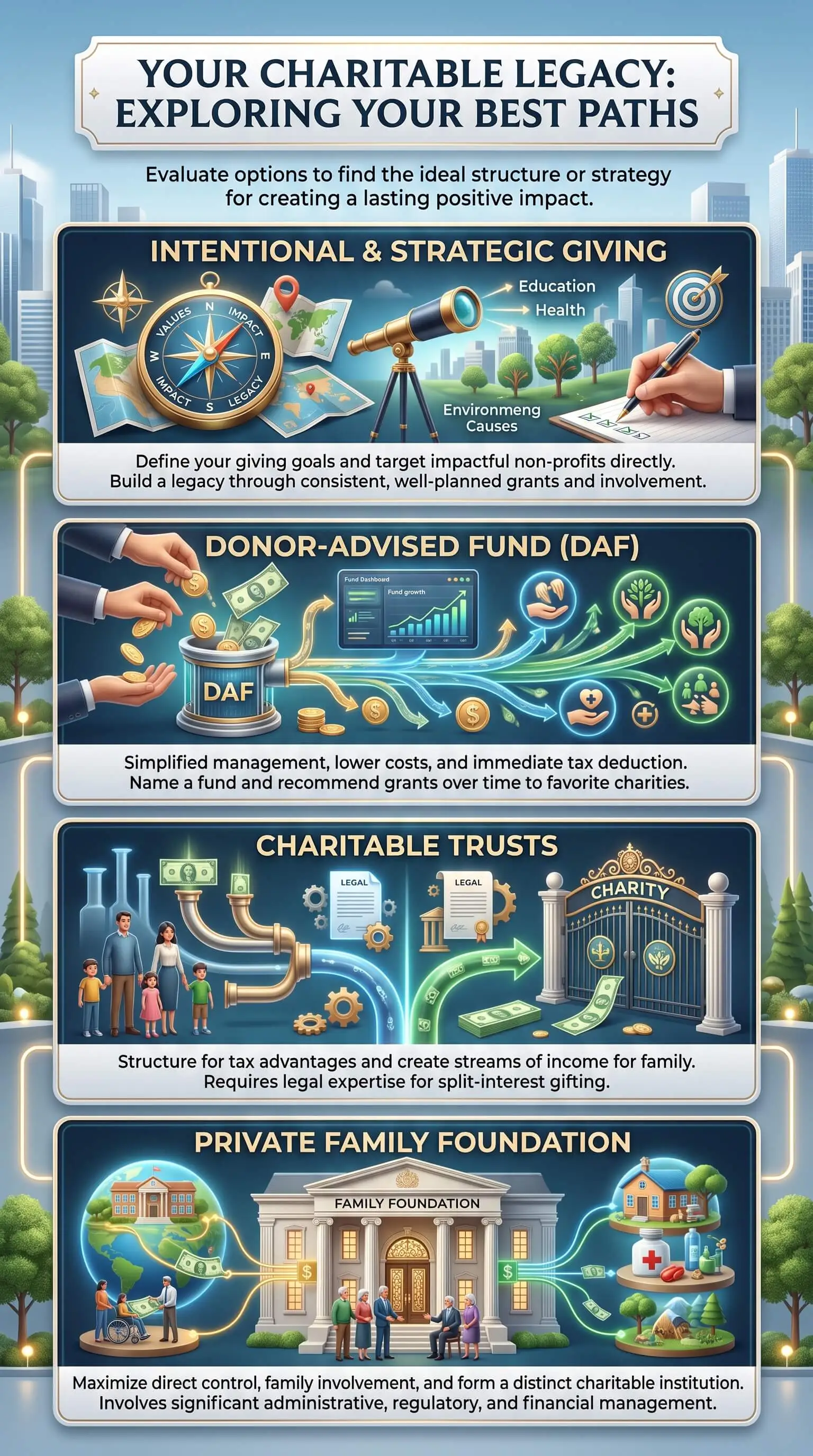
Five Ways Families Build a Philanthropic Legacy
Private family foundation. You get the most control over grants and governance, along with a public identity for your giving. You also take on the most work, including an annual Form 990-PF filing, an excise tax on net investment income, and a required yearly distribution of roughly 5% of assets.
Donor-advised fund (DAF). A sponsoring charity holds the account. You take the deduction when you contribute and recommend grants whenever you're ready. Setup can happen in days, but your grant decisions are advisory and the sponsor's rules decide who can advise after you.
Charitable lead and remainder trusts. These tie directly to your estate and wealth transfer plans, with one stream going to charity and the other to family in the order you set.
Direct gifts and pledges. A named scholarship at your child's school is a legacy on its own. It holds up best when someone tracks the pledge and records what the family intended.
Bequests and planned gifts. Charitable intent written into an estate plan carries forward even if you never create a separate giving entity during your lifetime.
Family Foundation vs. Donor-Advised Fund vs. Charitable Trust
Family foundation: Expect months of setup and the highest ongoing cost. Your family controls every grant and can hold board or staff roles. Filings are public, so privacy is limited, and annual compliance is heavy.
Donor-advised fund: Setup takes days and costs stay low. Grants are recommendations, and you can name family members as successor advisors. It's the most private option, with very little compliance on your end.
Charitable trust: Plan on a few weeks with your attorney and a moderate cost. The trust document sets how grants flow, and family members typically appear as beneficiaries. Privacy and ongoing compliance both land in the middle.
The more control and visibility your family wants, the more administration you should plan to carry.
When Family Foundation Management Makes Sense
In our experience, a foundation earns its keep when most of these describe your family:
You expect large, recurring grants over many years.
You want your family name publicly tied to the work.
You plan to give children or grandchildren formal board seats or staff roles.
You're willing to pay for the time and professional support that family foundation management takes, every single year.
If only one fits, a donor-advised fund or trust will likely deliver the same impact with less friction. Plenty of families run both, keeping the foundation for the core mission and using a DAF for causes individual members care about, including education-related priorities shaped with guidance from an educational consultant.
How Philanthropic Planning Ties It Together
Generosity is common. A repeatable giving strategy is not, and that difference is what separates a legacy from a drawer full of receipts. We start by writing down what the family values. Then we choose the vehicles and build the records and routines that keep consistent long after the first year's enthusiasm fades. Working with family office teams that provide philanthropic planning services means your DAF, foundation, trusts, and school gifts are coordinated instead of scattered across December.
Your CPA and attorney remain the technical experts on tax and legal questions. We coordinate the strategy and implementation, keeping records clean and timing aligned with the rest of your tax and estate plan.
Bringing the Next Generation Into Giving
A legacy lasts only if the next generation wants to carry it. A few places to start:
Write a one-page family mission statement together.
Let each child direct a small share of a DAF every year and explain the choice at the holiday table.
Ask a teenager to help choose the recipient of a family-funded school scholarship.
Hold one family meeting a year, even if it only lasts an hour.
Families who already think hard about education, like those who work with private school consultants to find the right independent school, tend to find these conversations come naturally.
"The families with the most durable legacies rarely start with a structure. They start at the kitchen table, sometimes disagreeing, about what matters and why. We've sat with families a few weeks after a business sale who were ready to file foundation paperwork that month. Once we slowed down and wrote their priorities first, several chose a donor-advised fund and a simple giving calendar instead, and their giving became steadier and easier for their children to explain."
7 Essential Resources
We send families to these before their first meeting with an attorney. Each one answers a different part of the decision.
1. The IRS Rules on Private Foundation Payouts
This page lays out the minimum distribution requirement and the 30% excise tax a foundation owes if it falls short. Worth reading before anyone calls a foundation low maintenance.
2. The IRS Overview of Donor-Advised Fund Requirements
A short look at the federal rules DAF sponsors follow, which helps explain why your grant decisions are advisory rather than final.
3. IRS Publication 526 on Charitable Contributions
The reference your CPA will likely pull up anyway. It covers what counts as a deductible gift and how deduction limits work.
Source: https://www.irs.gov/publications/p526
4. The National Benchmark Study of Family Foundations
The National Center for Family Philanthropy surveys family foundations every five years. Trends 2025 shows how they actually govern, grant, and bring in the next generation.
Source: https://www.ncfp.org/trends-2025-release
5. A Side-by-Side Look at DAFs and Foundations
National Philanthropic Trust compares control, succession, and administration, including how some DAFs can pass to successor advisors indefinitely.
Source: https://www.nptrust.org/donor-advised-funds/daf-vs-foundation/
6. Deciding Whether a Private Family Foundation Fits
Charles Schwab's guide walks through mission and lifespan questions, and it makes a point we agree with: you don't have to pick just one vehicle.
Source: https://www.schwab.com/learn/story/is-private-foundation-right-you
7. How to Choose Between Giving Vehicles
J.P. Morgan explains where the administrative burden falls with each option and why personal priorities belong in the decision alongside charitable ones.
Supporting Statistics
The numbers below come from national research, and each one lines up with something we see in our own client work.
1. Family Foundations Are Getting Larger
The National Center for Family Philanthropy's Trends 2025 study of 524 family foundations found that 47% now hold more than $10 million in assets, up from 26% in 2020.
Why this matters: A bigger foundation needs more running. The families we work with who plan for staffing and recordkeeping before the assets arrive have a much easier time than those who build it after.
Source: https://ministrywatch.com/study-family-foundations-assets-soar/
2. Most Family Foundations Give Beyond the 5% Minimum
According to NCFP, just 25% of family foundations now spend only the 5% minimum, down from 38% in 2015.
Why this matters: More families treat 5% as a floor. We read that as purpose driving the plan instead of a payout rule, which is how we'd want any family's giving to work, foundation or not.
3. Donor-Advised Funds Are Now Widely Used
National Philanthropic Trust reports more than 873,000 individual donor-advised fund accounts in the United States.
Why this matters: The DAF has gone mainstream. For many families we serve, it's the easiest way to start giving with structure, and it can sit alongside a foundation later if one ever makes sense.
Source: https://www.nptrust.org/what-is-a-donor-advised-fund/grantmaking-rules/
Final Thought and Opinion
Our view is simple. Most families should start with a clear purpose and a flexible vehicle, then add a foundation only when their scale and appetite for governance call for one. A foundation is a useful tool, but the legacy itself lives in the family's purpose and its follow-through.
What we see across the families we serve:
Giving lasts when the family agrees on why before deciding how.
A simple structure with clean records beats an elaborate one nobody maintains.
The families who give with the most confidence revisit their priorities every year and plan gifts alongside their tax and estate work instead of rushing checks out in late December. Multi family office wealth management services can help coordinate that broader planning so philanthropy stays connected to the family's financial goals. They also bring their children in early, with genuine input, so the next generation sees itself as a steward of the family's giving rather than an heir to a checkbook.
Frequently Asked Questions
Q: Do I need a family foundation to leave a philanthropic legacy?
A: No. Donor-advised funds, charitable trusts, direct gifts, and bequests can all build a lasting legacy. A foundation makes the most sense when your family wants full control and formal roles for the next generation.
Q: What does family foundation management involve?
A: Grantmaking, investment oversight, board meetings, recordkeeping, the annual Form 990-PF, and meeting the IRS minimum distribution each year. Most families bring in outside support so the work doesn't land on one person's desk.
Q: Is a donor-advised fund better than a family foundation?
A: It depends on what you need. A DAF is simpler and cheaper to run, and it keeps your giving more private. A foundation gives you more control and more ways to involve family. Plenty of families use both.
Q: How much money do you need to start a family foundation?
A: There's no legal minimum. The better question is whether your giving is large enough to justify the legal setup and years of ongoing administration. Your CPA and attorney can help you weigh that against your goals.
Q: What do philanthropic planning services include?
A: Usually, clarifying what your family wants to accomplish, choosing and coordinating the right structures, documenting every gift, and supporting family involvement over time. At Legacy Bridge, we coordinate all of it with your tax and legal advisors.
Q: How can I involve my children in our family's giving?
A: Start small and give them a genuine voice. Let them research a cause and recommend a DAF grant to support it. Regular conversations about why you give matter more than any title.
Ready to Give With Purpose?
Whether you're weighing a foundation or a simpler path, we'd welcome the conversation. Legacy Bridge Private Family Offices provides philanthropic planning services and outsourced family office executive services that put your family's values first and coordinate every giving structure with your CPA and attorney. Schedule a private consultation with our West Des Moines team, and we'll help you build a giving plan your children can carry forward.